
¿Deberías comprar múltiples extensiones de dominio a modo defensivo?
Acabas de asegurar tunombre.com, y entonces se cuela la duda: ¿no deberías también agarrar .io, .co, .net, el plural, la errata común, y quizás .app antes de que algún okupa lo haga? La página de pago del registrador está encantada de ayudar: ya te ha premarcado seis casillas adicionales. Comprar dominios de forma defensiva se siente como el movimiento responsable y adulto. Para la mayoría de las startups en etapa temprana, es lo contrario: un lento impuesto recurrente que pagas para resolver un problema que todavía no tienes. Esta guía te da una línea clara y con opinión entre los registros defensivos que realmente se ganan su tarifa de renovación y los que solo enriquecen al registrador.
Añade ZeroTaken como fuente preferida en Google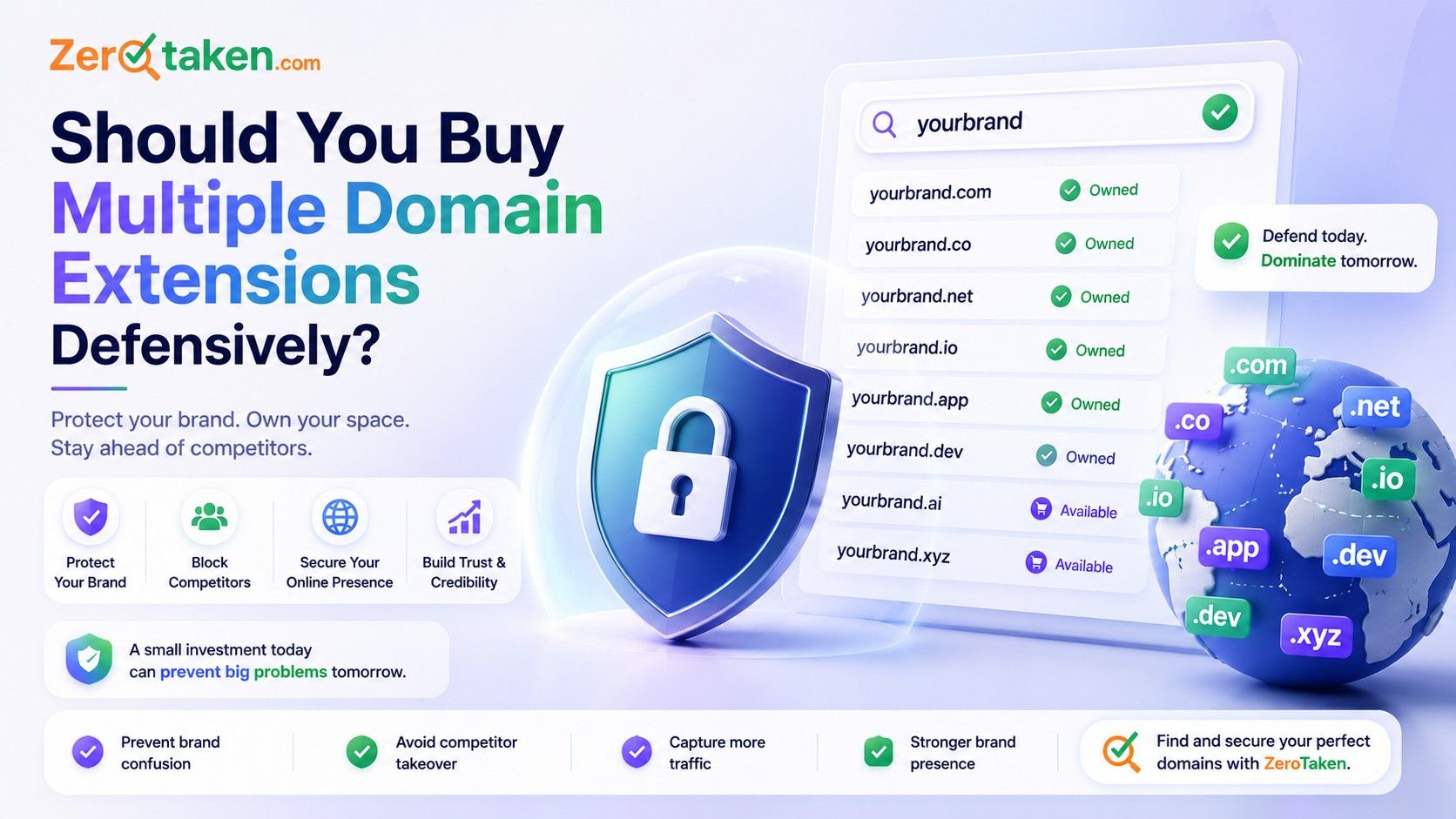
¿Qué significa realmente comprar dominios de forma defensiva?
El registro «defensivo» significa comprar variantes de tu dominio principal no porque vayas a usarlas, sino para evitar que alguien más las use. Es un seguro, no un inventario. Las variantes suelen caer en unas pocas categorías, y agruparlas todas juntas es precisamente por qué los fundadores gastan de más: cada categoría tiene un perfil de riesgo muy distinto.
Antes de decidir cuánto gastar, necesitas saber cuál de estas te están vendiendo realmente. La página de venta adicional del registrador las mezcla todas en una única lista de verificación que te hace sentir culpable.
- TLDs adyacentes — el mismo nombre en .io, .co, .net, .app, .ai, etc.
- Variantes con erratas — la letra que falta, la letra duplicada, las teclas intercambiadas (goggle.com para google.com).
- Plural / singular — tunombre.com frente a tunombres.com.
- Formas con guion y con espacio — tu-nombre.com cuando posees tunombre.com.
- TLDs de código de país — .co.uk, .de, .in para mercados en los que quizás nunca entres.
¿Debería siquiera una startup en etapa temprana comprar dominios defensivos?
Mayormente, no. Aquí está la verdad incómoda: antes de tener tráfico real, ingresos reales, o una marca que alguien reconozca, nadie está corriendo por okupar tus variantes. Los okupas y los que aparcan erratas persiguen nombres que ya generan tráfico de escritura directa. Una startup previa al lanzamiento con cincuenta visitantes al mes no está en el radar de nadie, y comprar doce extensiones para defenderla es resolver un problema que no tendrás durante un año, si es que llega a suceder.
El costo no es la compra única; es la renovación acumulativa. Cada dominio defensivo es una suscripción que pagarás, y olvidarás cancelar, durante toda la vida de la empresa. Diez registros defensivos se convierten silenciosamente en unos pocos cientos de dólares al año de pura sobrecarga que no te compra nada que una marca registrada y un buen dominio principal no comprarían.
Gasta ese dinero temprano en el único dominio sobre el que realmente vas a construir. La expansión defensiva es una decisión que puedes retomar el día que tengas una marca que valga la pena defender, y para entonces tendrás los ingresos para hacerlo deliberadamente en lugar de en pánico al pagar.
¿Qué dominios defensivos realmente vale la pena comprar?
Una lista corta y honesta. Si una variante supera una de estas barras, cómprala; si no, sáltatela. El objetivo es cubrir el puñado de casos donde la confusión es genuinamente probable, no poseer el alfabeto entero.
Fíjate en lo que tienen en común todas estas: protegen contra un error que un cliente real podría cometer plausiblemente mientras intenta llegar a ti. Esa es la única prueba que importa.
- La errata obvia. Si tu nombre tiene una falta de ortografía predecible (una letra muda, una consonante fácilmente duplicada), agárrala y redirígela con un 301 a tu sitio real. Esta es la única compra defensiva de mayor valor.
- El gemelo plural o singular —pero solo si cambia el significado o es genuinamente fácil de confundir. «Tornillo» frente a «Tornillos» importa; «Notion» no tiene un plural significativo que defender.
- El único TLD adyacente en el que realmente vive tu categoría. Si todos los competidores en tu espacio están en .io y los clientes asumirán que tú también, poseer tanto .com como .io puede valer la pena. Un gemelo, no cinco.
- Tu marca exacta en un ccTLD para un mercado en el que ya estás operando —no mercados con los que estás fantaseando.
¿Qué registros defensivos son un desperdicio de dinero?
Aquí es donde se evaporan la mayoría de los presupuestos defensivos. Estos registros se sienten prudentes y no entregan casi nada, porque defienden contra ataques que no le suceden a empresas de tu tamaño.
Si te sorprendes justificando uno de estos con «pero ¿y si alguien…», detente. «¿Y si?» no es un modelo de amenaza. Un modelo de amenaza es evidencia de que la gente en tu categoría realmente es blanco de esto.
- El barrido completo de TLDs — .net, .org, .info, .biz, .app, .dev, .xyz todos a la vez. Usarás un dominio. El resto es peso muerto.
- Cada errata concebible. Hay docenas; no puedes comprarlas todas, y defender tres mientras ignoras veinte no logra nada.
- Versiones con guion de tu nombre. Los usuarios reales casi nunca escriben un guion que no está ahí, y los motores de búsqueda igualmente los enviarán a ti.
- Códigos de país para mercados en los que no tienes ningún plan concreto de entrar este año. Cómpralos cuando el plan sea real.
- Variantes largas de coincidencia exacta de palabras clave «para SEO». Poseer los-mejores-widgets-baratos-online.com no hace nada por tu posicionamiento en 2026.
¿Cuánto cuesta realmente el registro defensivo a lo largo del tiempo?
La trampa es pensar en dólares de una sola vez cuando el número real es recurrente. Un .com se renueva por aproximadamente 10–15 dólares al año; muchas extensiones nicho y nuevas se renuevan por 30–70 dólares o más, y el precio promocional bajo del primer año nunca es el precio de renovación. Esa brecha es todo el modelo de negocio.
Haz las cuentas honestas antes de pagar. Diez dominios defensivos a un promedio de 25 dólares/año en renovaciones son 250 dólares al año, cada año, indefinidamente. En los primeros cinco años de una startup, eso es más de mil dólares para sentarte sobre nombres que nunca usaste —dinero que podría haber ido a la renovación de tu .com real, a una solicitud de marca registrada, o literalmente a cualquier cosa con un retorno.
El punto no es que los dominios sean caros. Es que los dominios defensivos son la única categoría de gasto que crece silenciosamente, no entrega ninguna ventaja, y es fácil olvidar que estás pagando por ella. Trata cada registro defensivo como una partida permanente y naturalmente comprarás muchos menos.
¿Qué es lo que realmente protege tu marca en lugar de acumular dominios?
Poseer quince extensiones no es una estrategia de marca; es un pasatiempo. Las cosas que genuinamente protegen un nombre son más baratas, más duraderas, y no se renuevan hacia el infinito.
Una marca registrada supera a un muro de dominios defensivos en todos los sentidos que importan. Te da respaldo legal para reclamar un nombre que alguien okupa —incluso a través de procesos de disputa de dominios UDRP/URS— sin importar qué extensión hayan agarrado. No puedes comprarte por adelantado esa protección, pero puedes solicitarla una vez.
- Registra tu nombre como marca en tu mercado principal. Es lo único que te permite recuperar un dominio después del hecho.
- Posee tu .com principal y úsalo de forma consistente —un dominio canónico único y fuerte es lo que hace que las erratas y las imitaciones sean obviamente falsas.
- Configura redirecciones 301 desde la una o dos variantes que sí compraste, para que refuercen el sitio real en lugar de quedarse inactivas.
- Monitorea el abuso en lugar de comprar por adelantado contra él. Vigilar a un okupa que realmente aparece es mucho más barato que poseer cada nombre que podría haber tomado.
¿Cuándo empieza finalmente a tener sentido la compra defensiva?
El registro defensivo es una decisión apropiada para cada etapa, no una del día de lanzamiento. El momento de expandir tu huella defensiva es cuando las cuentas se invierten —cuando tu marca genera suficiente tráfico de escritura directa y reconocimiento como para que un okupa realmente pueda sacar provecho de suplantarte, y cuando tienes los ingresos para tratar las renovaciones como un error de redondeo.
En la práctica eso significa: después de tener usuarios reales, un nombre reconocible, o financiación; si operas en una categoría con un historial documentado de okupación y phishing (fintech y cripto son los sospechosos habituales); o justo antes de un lanzamiento para el que esperas conseguir cobertura de prensa. En ese punto, compra deliberadamente de la lista «realmente vale la pena» de arriba —la errata obvia, el único TLD adyacente, los ccTLDs para mercados a los que realmente te has comprometido— y sáltate el resto. Más dinero no cambia la lógica; solo significa que puedes permitirte ser ligeramente más cauteloso, no indiscriminado.
¿Cuál es la regla general sencilla?
Compra el dominio sobre el que vas a construir. Añade la única errata obvia y, si tu categoría lo exige, un gemelo de TLD adyacente. Registra una marca. Redirige lo que posees a tu sitio real. Luego detente —y pon el resto del dinero en el producto.
Cuando estés considerando un nombre y quieras ver qué variantes y extensiones están siquiera disponibles antes de decidir qué vale la pena defender, pásalo por el verificador en vivo de ZeroTaken para que tomes la decisión con hechos en lugar de con las casillas premarcadas del registrador. La defensa es una decisión que se toma a propósito, no un reflejo de la página de pago.