
¿Qué tan corto debe ser un nombre de dominio? La regla real para 2026
Todo fundador acaba topándose con el mismo muro: el nombre de cuatro letras que te encanta ya no existe, y te quedas mirando la elección entre una palabra más larga que sí está disponible y una corta y mutilada que técnicamente lo está. En algún momento absorbiste la idea de que un dominio tiene que ser corto —muy corto— para ser bueno, así que empiezas a quitar vocales y añadir números para forzarlo por debajo de algún límite de caracteres invisible. Ese instinto tiene razón a medias y es una trampa a medias. La longitud sí importa, pero no de la forma en que la mayoría piensa, y perseguir la brevedad por sí misma es cómo los fundadores terminan con nombres que nadie sabe deletrear. Esta es la regla real.
Añade ZeroTaken como fuente preferida en Google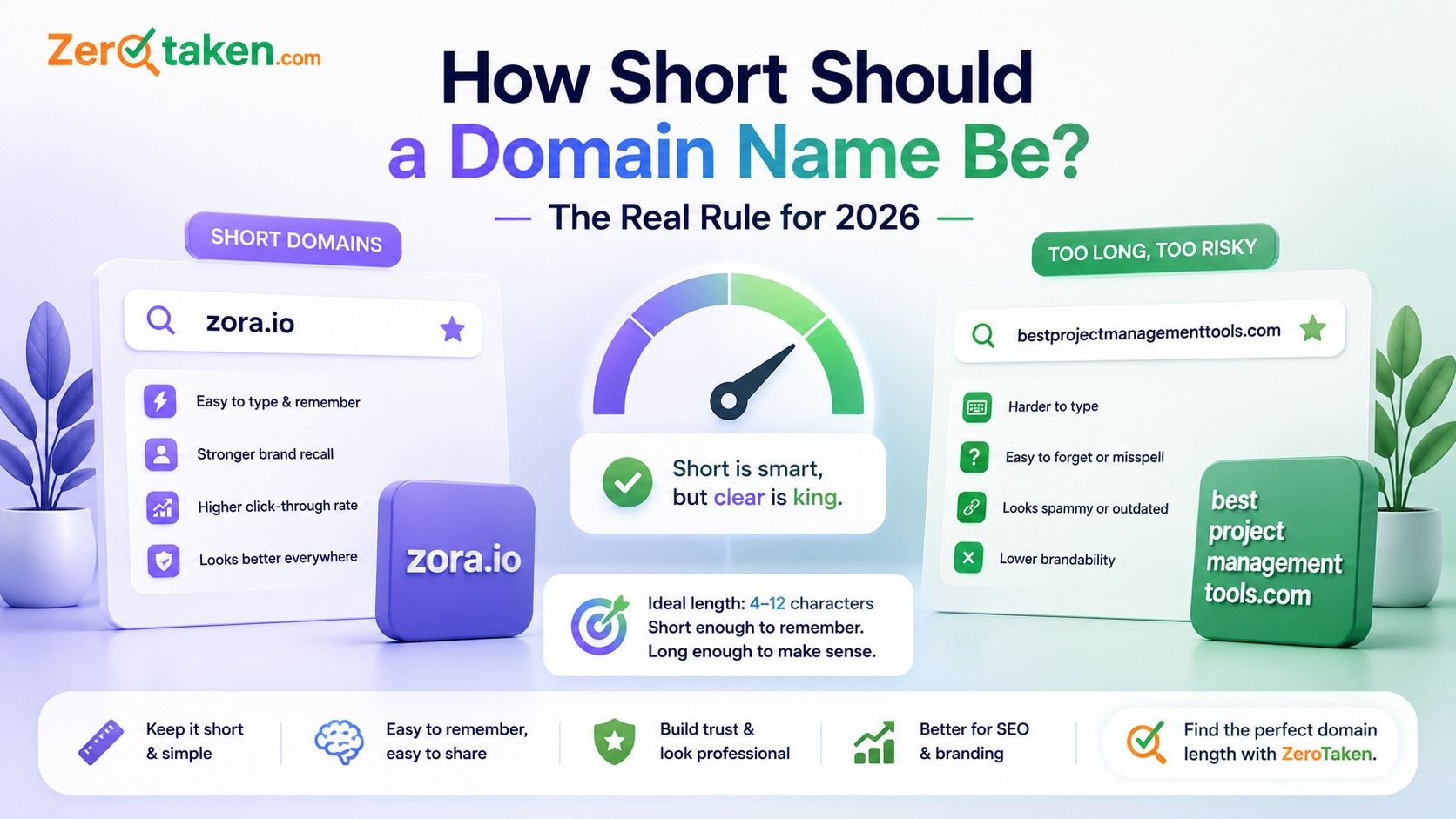
¿La longitud del dominio realmente importa en 2026?
Sí, pero por razones humanas, no algorítmicas. Google no cuenta las letras de tu dominio y te clasifica en consecuencia; un nombre de quince caracteres y uno de cinco compiten exactamente en igualdad de condiciones por la visibilidad en las búsquedas. Así que si tu preocupación es el SEO, puedes olvidarte de ella por completo. La longitud no es un factor de posicionamiento.
Donde la longitud realmente muerde es en cada punto donde una persona toca tu nombre. Un dominio corto es más fácil de recordar después de oírlo una vez, más rápido de escribir en el teclado de un teléfono, más difícil de escribir mal, y más limpio en una tarjeta de presentación, un anuncio de podcast o una camiseta. Son ventajas reales y acumulativas, solo que no tienen nada que ver con los robots. La pregunta no es «¿lo corto me ayudará a posicionarme?». Es «¿lo corto ayudará a un humano a encontrarme de nuevo una semana después de haber oído mi nombre en una conferencia?».
¿Cuál es la longitud ideal para un nombre de dominio?
Fíjate en la parte de segundo nivel del nombre —la parte que realmente eliges, antes del punto—. El punto óptimo está aproximadamente entre seis y catorce caracteres y una a tres sílabas. Eso no es una superstición; es donde se encuentran la memorabilidad y la disponibilidad. Por debajo de seis caracteres, casi todo lo pronunciable ya desapareció hace tiempo o se vende por cinco cifras en el mercado secundario. Por encima de catorce, el nombre empieza a sentirse como una frase, se trunca en los identificadores de redes sociales, e invita a errores tipográficos cada vez que alguien lo escribe de memoria.
Fíjate en que casi cualquier marca tecnológica que se te ocurra de inmediato —Stripe, Notion, Figma, Vercel, Linear, Slack, Zoom— cae dentro de esa franja. Son lo bastante cortas como para decirse de un tirón, pero lo bastante largas como para ser una palabra real y deletreable, en lugar de una cadena críptica de consonantes. El número de sílabas importa tanto como la longitud en bruto: un nombre limpio de dos sílabas con diez caracteres gana a uno de seis caracteres apretujados que nadie puede pronunciar al primer intento. Apunta al nombre más corto que un desconocido pudiera oír una vez y escribir correctamente.
¿Por qué los dominios cortos se sienten tan valiosos?
Porque reducen todo tipo de fricción entre oír tu nombre y llegar a tu sitio. Cuando alguien escribe tu dominio de memoria, cada carácter adicional es otra oportunidad de equivocarse y acabar en un competidor, una página aparcada, o un 404. Los nombres cortos sobreviven al juego del teléfono descompuesto: se repiten de boca en boca con mayor exactitud, caben dentro de un identificador de Twitter o Instagram sin truncarse, y se leen con claridad en el único lugar donde la longitud es brutal: dicho en voz alta. Un nombre que un presentador de podcast pueda decir una vez y esperar que los oyentes lo recuerden vale dinero de verdad.
También hay una señal de estatus escondida en la brevedad. Un nombre corto, limpio y de coincidencia exacta dice en silencio «llegamos aquí temprano y estamos establecidos», de la misma forma en que un .com de una sola palabra señala una empresa que lleva tiempo existiendo. Esa percepción vale algo en un pitch o en una primera impresión. Pero —y aquí es donde los fundadores sobrecorrigen— esa señal se evapora en el momento en que el nombre corto se consigue mediante un truco. Un nombre corto que parece una matrícula de coche no se lee como premium. Se lee como el nombre de una empresa que no pudo permitirse el bueno.
¿Cuándo es un dominio más largo la elección más inteligente?
Más a menudo de lo que admite la multitud del «mantenlo corto». Una palabra compuesta clara de dos palabras casi siempre gana a una sola palabra corta pero ambigua. GetYourGuide, SendGrid, LaunchDarkly y DigitalOcean superan con creces la marca de los diez caracteres, y ninguna sufre por ello, porque son instantáneamente pronunciables, obviamente deletreables, y dicen algo sobre lo que hace la empresa. La claridad se acumula; un nombre que la gente puede deletrear al primer intento te ahorra tráfico silenciosamente todos los días.
La longitud también vale la pena cuando te compra la marca exacta en la extensión que quieres. Si la opción disponible es un .com limpio y más largo frente a un .com corto, apretujado y mal escrito, elige el más largo siempre: la confianza del .com y la ortografía sin esfuerzo valen más que dos caracteres ahorrados. La única longitud que realmente perjudica es la que viene del relleno: palabras de relleno, descriptores redundantes, o un nombre tan largo que se parte en dos líneas en un teléfono. Un nombre de once caracteres con propósito no es «demasiado largo». Un nombre de once caracteres vago y olvidable simplemente es olvidable, y recortarlo a nueve no habría arreglado eso.
¿Qué trucos deberías evitar al perseguir un nombre corto?
Casi todos los atajos que usan los fundadores para forzar un nombre por debajo de cierto número de caracteres crean un problema peor que la longitud que resuelven. El objetivo nunca fue «pocas letras»: era «fácil de recordar y de escribir». Estos movimientos traicionan silenciosamente ese objetivo:
- Quitar vocales (a Flickr y Scribd les funcionó; a tu cuarto intento de hacerlo no le funcionará) — la mayoría de los nombres sin vocales simplemente parecen erratas y te obligan a deletrearlos para siempre.
- Añadir números, así «get4» o «go2» — ahora tienes que aclarar «el número cuatro, no la palabra» cada vez que lo dices en voz alta.
- Guiones para conseguir un nombre ya ocupado — «mi-app.com» pierde el tráfico de escritura directa frente a «miapp.com» y se lee como la marca más barata, de segunda elección.
- Faltas de ortografía deliberadas solo por serlo — si la gente tiene que pensar cómo se deletrea, has añadido fricción, no la has eliminado.
- Apretujar dos palabras sin ruptura natural en una sola cadena impronunciable solo para ahorrar una sílaba — dilo en voz alta antes de decidirte; si tú tropiezas, todos los demás también lo harán.
¿Cómo encuentras un nombre que sea corto y que realmente esté disponible?
Esta es la parte que hace difícil la brevedad: cuanto más corto y limpio es el nombre, más probable es que ya esté ocupado. El flujo de trabajo práctico consiste en generar una amplia lista de candidatos dentro de tu franja de longitud ideal, y luego comprobar la disponibilidad en varias extensiones rápidamente, porque el ganador suele ser la opción más corta que siga siendo tanto deletreable como libre, y no sabrás cuál es hasta que hayas probado varias docenas. ZeroTaken genera nombres aptos para marca a partir de una simple descripción de tu idea y los verifica en vivo en .com, .io, .co y más en una sola pasada, para que puedas barrer toda la franja en lugar de enamorarte del primer nombre corto que se te ocurra y descubrir que ya está ocupado.
Entonces, ¿qué tan corto debería ser realmente tu dominio?
Tan corto como puedas conseguirlo sin pagarlo en claridad. Apunta a entre seis y catorce caracteres y una a tres sílabas, favorece el extremo más corto cuando el nombre siga siendo pronunciable y deletreable, y detente en el momento en que ir más corto requeriría un guion, un número, una vocal eliminada, o una ortografía que nadie adivinaría. Un nombre de diez letras que un desconocido pueda oír una vez y escribir correctamente gana a uno de seis letras que primero tienen que ver escrito, siempre.
La regla real no es un recuento de caracteres. Es esta: elige el nombre más corto que aún así pase la prueba de decirlo en voz alta. Si alguien puede oírlo en un evento ruidoso y escribirlo en su teléfono a la mañana siguiente sin pensarlo dos veces, es lo bastante corto. Todo lo que va más allá de eso es vanidad, y la vanidad no vale el tráfico que pierdes por un nombre que la gente no sabe deletrear.