
Tek bir oturumda 200 startup alan adını kontrol ettik. Sadece 5'i boştu.
Her kurucu bunu hissetmiştir: sevdiğiniz bir isim bulursunuz, bir kayıt şirketine yazarsınız ve zaten alınmış olduğunu görürsünüz. Bu şanssızlık mı, yoksa tüm isim alanı gerçekten bu kadar dolu mu? Bunu öğrenmek için tahmin etmeyi bıraktık ve rakamları çıkardık. Bir beyaz tahtaya gerçekten kısa listeye alacağınız türden 50 marka olabilir startup ismi adayı aldık ve her birini .com, .io, .ai ve .co'da canlı olarak kontrol ettik. Bu, ZeroTaken'ı çalıştıran aynı araçla tek bir oturumda doğrulanmış 200 alan adı demek. Sonuç beklediğimizden daha keskindi: 200'den yalnızca 5'i müsaitti. İşte bu verinin 2026'da bir şirkete isim vermek hakkında söyledikleri ve uğruna savaştığınız uzantının düşündüğünüzden çok daha az önemli olmasının nedeni.
ZeroTaken'ı Google'da tercih edilen kaynak olarak ekle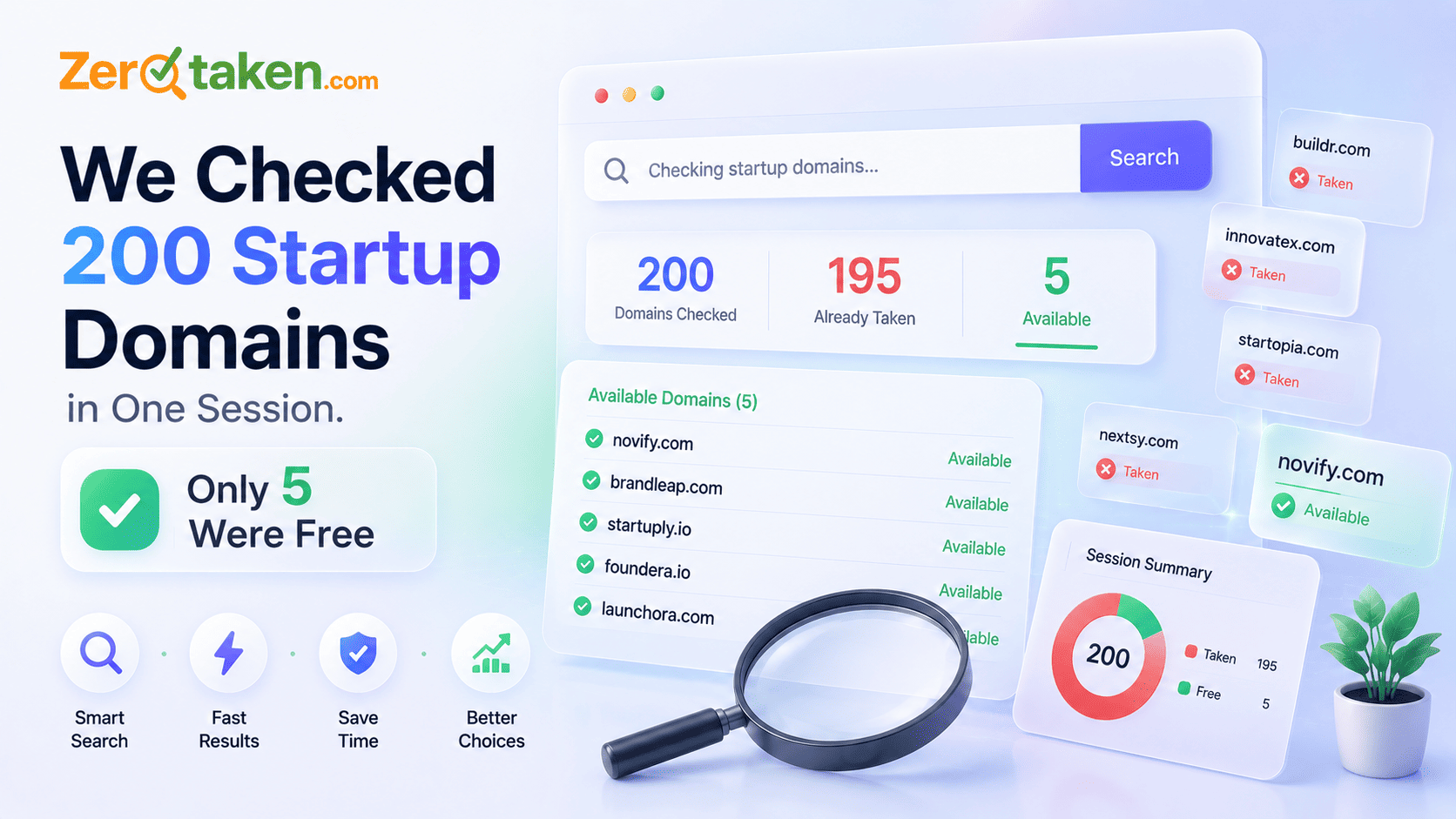
Tam olarak neyi test ettik?
Tanım gereği zaten müsait olan rastgele saçma kelimelerin bir listesi değil, kurucuların isim verme şeklini gerçekten yansıtan bir örneklem istedik. Bu yüzden insanların gerçekten fikir aldığı üç kategoride 50 kök kelimeyi elle oluşturduk: sıradan sözlük kelimeleri (harbor, summit, beacon, cobalt, meridian, velocity, fathom), bariz iki kelimelik bileşikler (payflow, cloudnest, datavault, launchpad, swiftpay, openledger) ve uydurma ama telaffuz edilebilir marka kelimeleri (zephyra, novalink, aetherly, mintware, embergrid).
50 kökten her biri dört uzantıya karşı kontrol edildi — .com, .io, .ai ve .co — bize toplam 200 arama verdi. Her kontrol, önbelleğe alınmış bir liste değil, tam olarak bu oturumda çalıştırılan canlı bir müsaitlik sorgusuydu. Bir alan adı aktif isim sunucularına çözümlendiğinde, onu alınmış saydık; yalnızca gerçekten kayıtsız isimler müsait sayıldı.
- Örneklem: 50 marka olabilir kök kelime
- Uzantılar: .com, .io, .ai, .co
- Kontrol edilen toplam alan adı: 200
- Yöntem: bu oturumda canlı müsaitlik aramaları
Gerçekte kaç tanesi müsaitti?
Beş. 200 alan adından tam olarak beşi boş çıktı — %2,5'lik bir müsaitlik oranı. Başka bir deyişle, bir kurucunun makul olarak isteyebileceği isimlerin 195'i çoktan gitmişti.
Daha da çarpıcı olanı: 50 kök kelimeden sadece 3'ünde herhangi bir yerde tek bir uzantı boştu. Diğer 47'si dört TLD'de de tamamen kayıtlıydı. Kısa listeniz sıradan bir kurucunun kısa listesi gibi görünüyorsa, 2026'daki temel beklenti, favori isminizin tüm büyük uzantılarda aynı anda alınmış olmasıdır.
Hangi uzantıda en çok açık isim vardı?
İşte bu çalıştırmadan uzantı bazında dökümü. Farklar gerçek ama küçük — ve hiçbiri bir kurtuluş değil.
Herkesin beklediği manşet doğrulandı: .com bir duvardı. 50 adayımızdan hiçbiri .com'da müsait değildi. Çok reklamı yapılan alternatifler biraz daha iyi performans gösterdi, .ai önde, ama 'sıfırdan biraz daha iyi' hâlâ bir yuvarlama hatası.
- .com — 50'de 0 müsait (%0)
- .io — 50'de 1 müsait (%2)
- .ai — 50'de 3 müsait (%6)
- .co — 50'de 1 müsait (%2)
Peki .ai, .com sıkışıklığının cevabı mı?
Pek değil — ve verinin kaçınılmaz kıldığı kısım da bu. .com'dan .ai'ye geçmek müsaitliğimizi %0'dan %6'ya çıkardı. Bu daha iyi bir piyango bileti, ama yine de bir piyango bileti. 'Ben sadece .ai'yi alırım' diye düşünen kurucular, on yıl önce .com'u vuran aynı sıkışıklığı sessizce keşfediyorlar, çünkü alternatif TLD'ler tam olarak aynı arzu edilen kelimelere yönelik tam olarak aynı talebi emiyor.
Gerçek ders şu ki, bir alan adı alıp alamayacağınıza karar veren değişken uzantı değildir. Çalıştırmamızda, aynı kök kelime neredeyse her zaman ya dört uzantının tamamında alınmıştı ya da bazılarında boştu — müsaitlik uzantıyı değil, kelimeyi takip ediyordu. .com'a karşı .io'ya karşı .ai için savaşmak, yanlış boyutu optimize etmektir. Sayıyı gerçekten değiştiren boyut, kelimenin kendisinin ne kadar özgün olduğuydu.
Gerçekte ne tür isimler hayatta kaldı?
Örneklemimizdeki her sözlük kelimesi ve her bariz bileşik, her yerde alınmıştı. Harbor, summit, beacon, payflow, cloudnest, datavault — dört uzantının tamamında yok olmuş, istisnasız. Bu, 'bariz iyi isim' kategorisinin tamamı, silinip gitmiş.
Herhangi bir müsaitliğe sahip tek üç kök, uydurma kelimelerdi: mintware, silverstack ve embergrid. Ve onlar bile çoğunlukla .com yerine alternatif uzantılarda hayatta kaldı. Örüntü, bir kural olarak ifade edilebilecek kadar net: 2026'da, kayıt edilebilir bir alan adının bedeli, henüz başka hiç kimsenin düşünmediği bir kelimedir. Gerçeklik ve barizlik, tam olarak pazarın çoktan tükettiği şeylerdir.
İsimler kaydedildikçe müsaitlik saat saat değişebilir, bu yüzden bu üçünü bir rezervasyon değil, bu oturumun bir anlık görüntüsü olarak değerlendirin. Mesele belirli kelimeler değil — geriye kalanın şekli.
Bununla gerçekten ne yapmalısınız?
200'den 195 gerçekçi isim gittiyse, kazanan hamle daha sıkı kontrol etmek değil — farklı isimlendirmektir. Veriler, sizi %97,5 yerine %2,5'e yerleştiren birkaç somut stratejiye işaret ediyor.
Sözlük kelimelerinden değil, uydurma kelimelerden başlayın. Bir kök uydurun, yumuşak bir ek ekleyin, iki yarım kelimeyi karıştırın. Çalıştırmamızda hayatta kalan isimler, bir tezaurusun asla üretemeyeceği türden isimlerdi. Ve uydurma isimlerden oluşan bir kısa listeniz olduğunda, tek tek kayıt şirketi sekmelerine bakmak yerine tüm uzantılarda toplu olarak tek seferde kontrol edin — çalıştırmamızın tüm amacı, 200'ünü aynı anda test etmenin bir haftalık tahmin işini tek bir oturuma dönüştürmesiydi.
- Gerçek kelimeler yerine uydurma ve karma kelimeleri tercih edin — açık alan orada.
- Favori gerçek kelime isminizin her büyük TLD'de alınmış olduğunu varsayın ve ona aşık olmadan önce erken kontrol edin.
- .ai veya .io'yu .com kıtlığından bir kaçış yolu olarak görmeyin; onlar da aynı talep ile karşı karşıya.
- Bir kısa listenin tamamını bir seferde tüm uzantılarda kontrol edin, tek tek arama yapmak yerine.
- Uydurma bir isim .com'da boşsa, alın — bu kombinasyon artık istisna, varsayılan değil.
Bu rakam ne kadar dürüst?
Tek bir 200 alan adı çalıştırması bir sayım değil, bir anlık görüntüdür, bu yüzden okuyucunun aklında tutmasını isteyeceğimiz çekinceler burada. Örneklem, gerçekçi bir kurucu kısa listesine benzemesi için seçtiğimiz 50 isimden oluşuyor, bu da onu kasıtlı olarak insanların gerçekten istediği isimlere doğru eğiyor — ilgilendiğimiz nüfus bu, ama bu, %2,5 rakamının arzu edilen isimleri tanımladığı, olası dizilerin tüm alfabesini değil anlamına geliyor. Anlamsız diziler çok daha yüksek puan alır ve çok daha az şey ifade ederdi.
Buradaki 'müsait', satışta değil, kayıtsız anlamına gelir. Alınmış 195 alan adının bazıları park edilmiş ve bir bedel karşılığında ikinci el piyasada satın alınabilir olabilir — ama 'standart kayıt fiyatında müsait', kendi kendini finanse eden bir kurucu için önemli olan tek 'müsait' versiyonudur ve ölçtüğümüz şey de budur. Rakamlar bu oturum sırasındaki dünyanın durumunu yansıtıyor ve kayıtlar değiştikçe değişecektir.
Bu çekinceler açıkça belirtildikten sonra, bulgunun yönüne itiraz etmek zor: gerçekten istediğiniz türden bir isim için, modern isim alanı neredeyse tamamen talep edilmiş durumda ve seçtiğiniz uzantı, uydurduğunuz kelimenin yanında sadece bir dipnottur.