
How to Sell a Domain Name You Own (and What It's Realistically Worth)
Every founder ends up with a few domains they'll never build on: the pivot that died, the side project that never launched, the name you grabbed at 2 a.m. and forgot. Selling one feels like free money, until you list it at $5,000, wait a year, and pay the renewal anyway. The honest truth is that most domains never sell, and the ones that do sell for a fraction of what their owners hoped. This guide shows how to tell which of your domains have a real buyer, how to price them without fantasy, and how to close a sale without getting scammed.
ZeroTaken'ı Google'da tercih edilen kaynak olarak ekle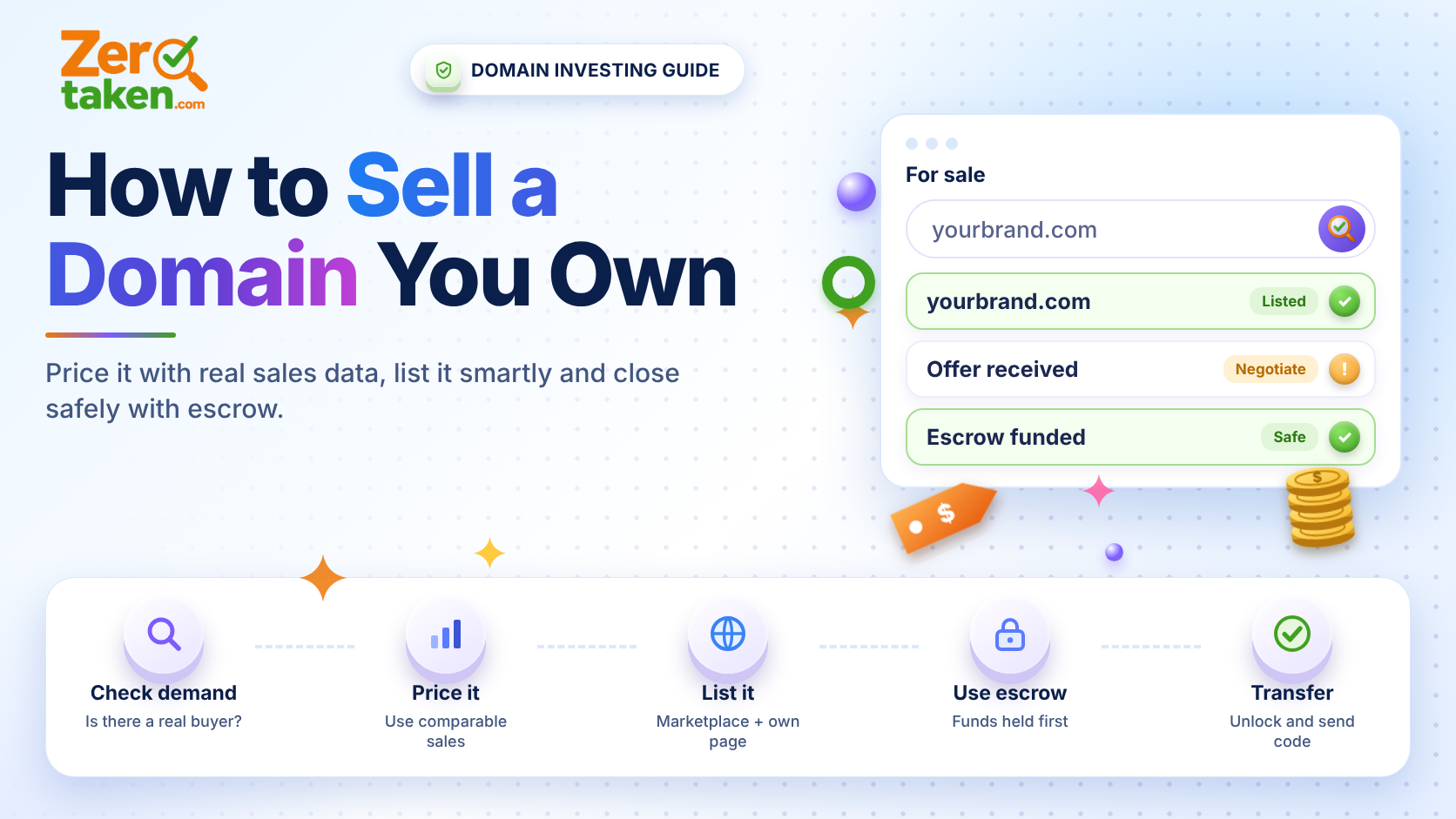
Will your domain actually sell?
Start by being brutal. A domain sells when a specific kind of buyer would rather pay you than start over with a different name. That buyer exists for a short list of domains, and your job is to figure out if yours is on it.
The domains with real demand share a few traits: a .com extension, one or two real words, easy to say and spell, and an obvious business use. Short brandable coinages can sell too, but only when they sound like a company. Long, hyphenated, or number-stuffed names almost never move, no matter how clever they felt when you registered them.
Be careful with domains built around someone else's brand or trademark. Selling those is the fastest way to a legal complaint instead of an offer, and a domain you registered to profit from another company's name is exactly what UDRP disputes are designed to take away.
- Strong candidates: .com, 4-10 characters, real word or smooth coinage, clear industry fit
- Weak candidates: hyphens, digits, awkward spellings, obscure extensions
- Never sell: names that mirror an existing company's trademark
How do you price a domain without guessing?
Ignore automated appraisal tools as a source of truth. They produce a confident dollar figure from a formula, and the number is routinely off by a factor of ten in either direction. Treat them as a rough conversation starter at best.
Use comparable sales instead. Databases like NameBio list real, reported domain sales, so you can search for names of similar length, extension, and keyword type and see what actually changed hands. Notice how many comparable names sold for low three or four figures, not the six figures that make headlines. The headline sales are outliers, and pricing your domain off them is how listings sit unsold for years.
Then price for the buyer, not for yourself. A startup choosing a name has a budget: the cost of a logo, a few months of ads, or a legal fee. If your price is bigger than the cost of simply rebranding to an available name, you've priced yourself out. Your real competitor is always the free alternative.
- Search reported sales of similar names, not appraisal-tool estimates
- Set a realistic asking price and a lower floor you'd genuinely accept
- Compare your price to what it would cost the buyer to pick another name
Where should you list it: marketplace, broker, or your own page?
You have three practical routes, and the best answer is usually a combination.
Marketplaces such as Sedo, Afternic, and Dan.com put your name in front of buyers and handle the transaction, in exchange for a commission that commonly lands somewhere in the 10-20% range depending on the venue. Many registrars also syndicate listings into these networks, so check whether your registrar does it before paying twice. Branding-focused marketplaces such as Squadhelp and Atom target founders who want a ready-made name and are better for short, brandable coinages than for exact-match keyword domains.
Brokers make sense only for names you honestly believe are worth five figures or more. They take a larger cut and work selectively, so expect them to decline mid-value names.
Finally, point the domain at a simple 'This domain is for sale' page with a price or an inquiry form. It costs nothing, it catches direct visitors, and serious buyers often type the name straight into a browser before they ever search a marketplace. Make the contact path obvious, because a buyer who can't reach you in one click moves on.
- Marketplace listing: broadest reach, commission on sale
- Broker: only for high-value names, higher cut
- Own for-sale page: free, catches direct traffic, use alongside the others
Should you ask for a price or wait for offers?
A fixed 'buy it now' price filters out time-wasters and lets impulsive buyers close immediately. 'Make an offer' gets more inquiries but invites lowballs and starts a negotiation you may not want. The best default is a visible price with room to negotiate down, set roughly 20-30% above your true floor.
If a buyer reaches out cold, never open with your lowest number and never reveal how badly you want to sell. Ask what they plan to build. A buyer with a funded company and a launch date will pay more than a speculator, and you'll learn which one you're talking to within two messages.
Consider lease-to-own when a startup can't pay a lump sum. They pay monthly, you keep the domain until the final payment, and you're not stuck choosing between a lowball and no deal. Use a payment arrangement run through an escrow service so the terms are enforced by a third party, not by trust.
How do you close the sale safely?
This is where scams live, so follow the same process every time. Agree on price and terms in writing. Open an escrow with a reputable service such as Escrow.com, where the buyer deposits the money first. Only after the funds are confirmed as secured do you start the transfer.
The transfer itself is routine. Unlock the domain at your registrar, request the authorization code, and give it to the buyer or let the escrow service handle the handoff. The buyer submits it at their registrar and approves the incoming transfer. If the domain was registered or transferred recently, check your registrar's rules, because newly registered domains and recent registrant changes are typically locked from transfer for a period, often 60 days.
Release nothing early. Do not send the authorization code before escrow confirms the money is held, and never accept a cheque, a screenshot of a payment, or an overpayment 'refund' request. When the buyer confirms the domain is in their account, escrow releases the funds to you, minus its fee, which is usually a small percentage often split or paid by the buyer.
- Written agreement first, then escrow, then transfer
- Unlock the domain and send the auth code only after funds are held
- Reject overpayments, cheques, and payment screenshots
Is it smarter to drop the domain than to keep paying?
Do the arithmetic once a year. A .com costs roughly a typical registration fee every year to hold. A domain that has had no genuine inquiry in two years, with no clear buyer type, is costing you money for a sale that probably won't happen.
A reasonable rule: keep a domain only if it has received a real inquiry, or if you can name the kind of company that would want it and what they'd pay. Otherwise let it expire. Your time and cash are better spent on the names that matter for your actual product.
And before you buy your next speculative domain, ask whether you'd actually build on it. Checking real availability for the names you plan to use takes seconds with a tool like ZeroTaken, and it keeps you from collecting domains you'll later have to sell.